
Which Milk Works Best in Your Coffee?
- Posted on
- By De Koffiebaron
- 0
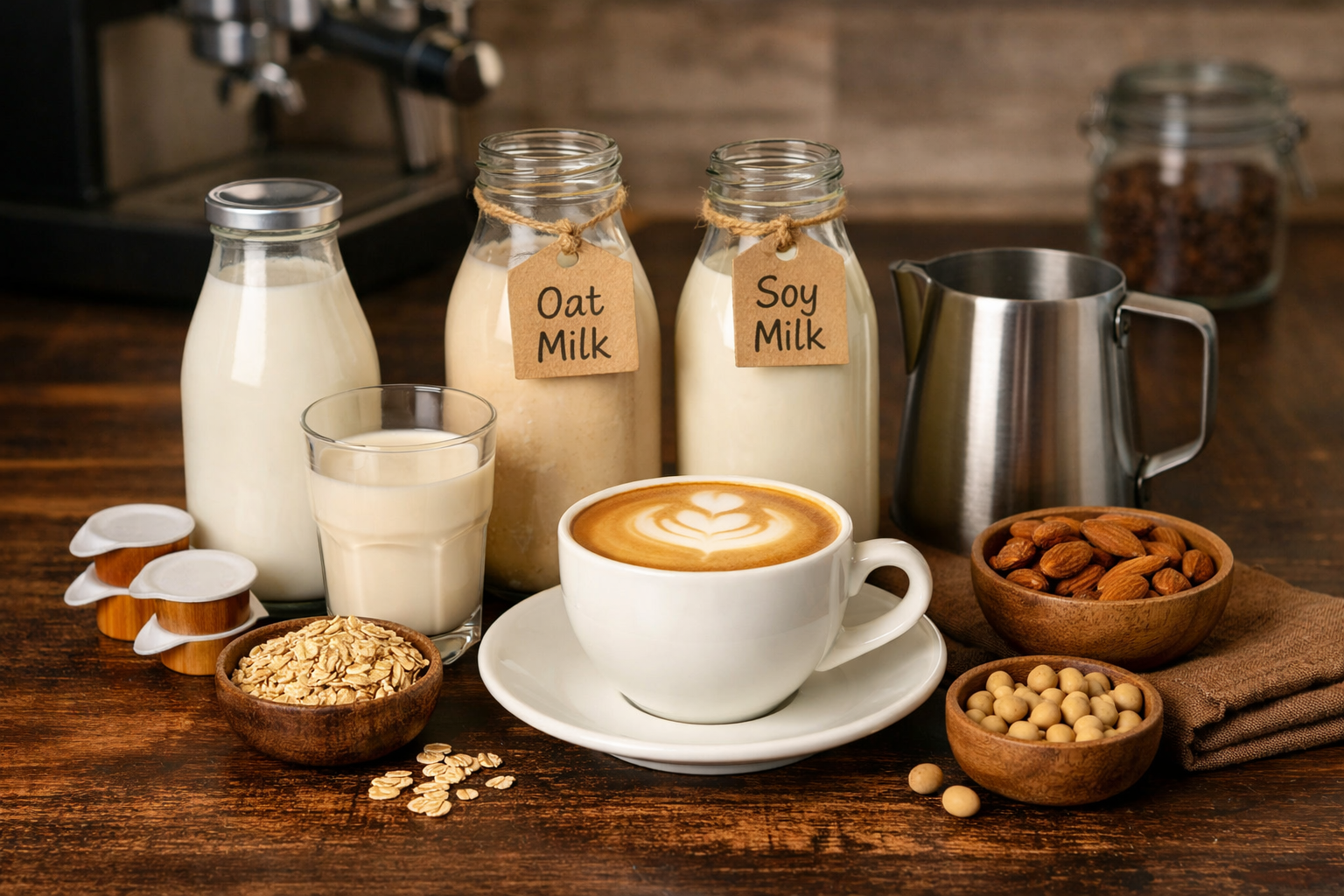
Discover which milk — from whole milk to oat drink — pairs best with cappuccino, latte, or flat white, including barista tips for perfect froth.
Which milk works best with your coffee? From cow’s milk to oat drink
Which milk works best in coffee depends on flavor, froth quality, and nutritional value. For cappuccino, latte, or flat white, the right milk can make the difference between a good cup and a perfect one.
Not all milk reacts the same with espresso. Fat, protein, and sugar content determine how well the milk froths and how sweet your coffee tastes. In this article, we compare the most popular milk types — both dairy and plant-based — to help you choose the best option for your coffee moments.
Best dairy milk for coffee
1. Whole milk
- Flavor: Creamy and slightly sweet
- Texture: Excellent for frothing, stable microfoam
- Health: High in calcium and protein, contains saturated fat
Whole milk is the standard in many coffee shops. The higher fat content creates a soft, full-bodied cappuccino with beautiful microfoam.
2. Semi-skimmed milk
- Flavor: Milder and less creamy than whole milk
- Texture: Froths well, but less stable
- Health: Lower fat, still a good source of calcium
A good compromise for those wanting a lighter coffee without sacrificing texture.
3. Coffee cream / cups
- Flavor: Rich and creamy, mild taste
- Texture: Not suitable for frothing
- Health: High in fat and calories, low nutritional value
Coffee cream cups are practical: long shelf-life and ideal for office or travel. Not the healthiest daily option.
Best plant-based milk for coffee
1. Oat milk (barista)
- Flavor: Lightly sweet, nutty
- Texture: Froths excellently, designed for coffee
- Health: Plant-based, often enriched with calcium and vitamins
Barista oat milk is a favorite in coffee shops, closely matching the creaminess of cow’s milk.
2. Soy milk
- Flavor: Neutral to slightly nutty
- Texture: Good frothing, especially barista versions
- Health: High in protein, low in saturated fat
Soy milk is one of the most balanced plant-based options for coffee.
3. Almond milk
- Flavor: Nutty, sometimes slightly bitter
- Texture: Less stable froth
- Health: Low in calories, low in protein
Good for a lighter coffee, though flavor can dominate.
4. Coconut milk
- Flavor: Distinctly coconutty, prominent
- Texture: Froths moderately, less creamy
- Health: High in saturated fat, low in protein
For those who enjoy a strong flavor, but less neutral with espresso.
Which milk to choose when?
- Classic cappuccino: Whole milk or barista oat milk
- Lighter option: Semi-skimmed milk or almond milk
- Plant-based & balanced: Soy milk or unsweetened oat milk
- Practical use: Coffee cream cups (in moderation)
Ultimately, it’s about personal taste. The right milk supports your coffee without overpowering the espresso flavor.
Barista tips: how to froth milk better
- Use cold milk: ideally around 4°C for best frothing
- Don’t overheat: milk above 65°C loses flavor and froth quality
- Barista versions: contain extra protein for stable foam
- Frothing technique: gently rotate the milk jug during frothing for fine microfoam
With these tips, you get the most out of both dairy and plant-based milk, achieving near-barista-quality coffee at home.
Curious which beans match best?
Check out our selection of coffee beans for cappuccino and latte, perfectly paired with your milk choice.
Summary
- Best froth: Whole milk or barista oat milk
- Healthiest choice: Soy milk
- Most neutral: Semi-skimmed milk
- Plant-based alternative: Oat milk
Experiment to find the perfect combination for your coffee moments.


Comments
Be the first to comment...